
Restaurant and Food Premises
Licensing Services
Understand Your Food Business Licensing Requirements
Licensing Consultation
and Eligibility Assessment
Preparing documents and
sending them to the client for signature
Filing the licence application
and paying the fees
Types of Licences
The licence application must be filed with the local official, or with the competent official at the district office or municipality in the area
Restaurant licences are divided into 2 types
If you are planning to open a restaurant, café, food court, convenience store that prepares food, supermarket, cold storage room, shop selling cooking ingredients, or any food-related business, obtaining permission for food sales premises or food storage premises is a necessary step before lawfully commencing your business.
Greenpro KSP provides a comprehensive service for obtaining permission for food sales premises or food storage premises, from consultation and verification of the licence type, through document preparation and filing of the application, until the licence is duly obtained.
Risks of Opening Without a Licence
In addition, operating a restaurant business requires compliance with trade requirements and the relevant laws, such as paying taxes, obtaining the various licences, and following rules and regulations, so that trade is conducted lawfully.
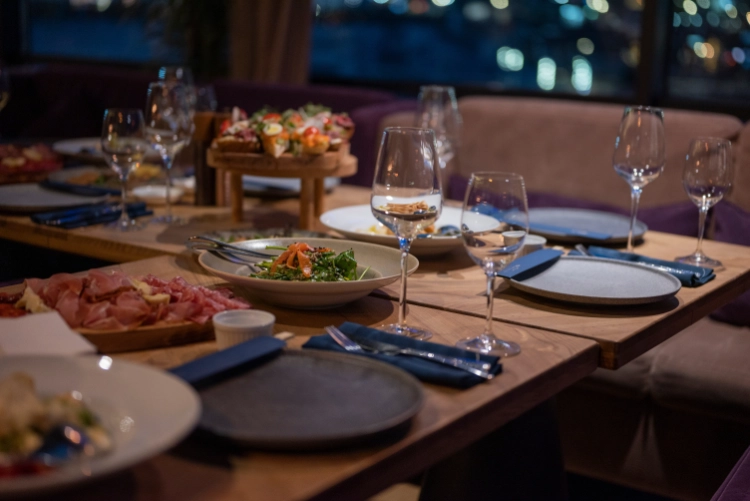

Why Do You Need a Restaurant Licence?
Obtaining a restaurant licence is a step for which permission is required by law before opening for business, whether the establishment is a small restaurant, a café or a large restaurant. Operating without permission may expose you to the risk of being ordered to close the shop, being fined, or having your business suspended by government agencies.
A restaurant licence is a document showing that your shop has passed inspection by the relevant government agencies and meets the prescribed standards, including:
- Hygiene standards
- Safety of the premises
- Structural and space requirements
- Legal requirements related to operating the business
The licence application may be made in the name of either an individual or a juristic person, and you should choose the form that suits the nature of your business. In addition, there may be further related steps, such as commercial registration, applying for special permission where hazardous activities or substances are involved, applying for a liquor licence, or addressing signboard tax.
Besides being a legal requirement, holding a licence also helps build credibility for your restaurant. Customers can be confident that the food and service meet standards and are safe, and that the business is operated properly, which benefits the image and long-term stability of the business. Business operators must prepare the documents and follow the steps required of them by law, so that the licence application is correct and complete.
Registering and Opening a Restaurant
To open a restaurant in Thailand, whether small or large, business operators must register and obtain licences in accordance with the law, so that the business operates smoothly and is protected from legal problems in the future. Registering a restaurant and applying for a food sales premises licence are important steps that should not be overlooked.
As a first step, business operators should review information relating to the business form they wish to establish, whether operating in the name of an individual or a juristic person. If you choose to register as a juristic person, such as a limited company or limited partnership, you must register the juristic person with the Department of Business Development (DBD) and prepare all the related documents. If you operate in the name of an individual, you may need to complete commercial registration with the district office or municipality in the area where the shop is located.
To apply for a restaurant business licence, business operators must prepare important documents, such as a copy of the house registration, a copy of the ID card, documents showing the right to use the premises, the commercial registration certificate or the company affidavit (company certificate) in the case of a company, as well as the restaurant floor plan and details of hygiene management in the shop. Verifying that all documents and information are correct before applying for the licence will help reduce delays and problems that may arise later.
In addition, holding a licence and registering your restaurant properly helps build the credibility of your restaurant. Customers will have confidence in its safety and hygiene standards, and it supports future business expansion, whether through applying for additional licences, opening more branches, or participating in government support programmes.
Therefore, if you are planning to open a restaurant, be sure to give priority to proper registration and licensing from the outset, so that your business grows steadily and in compliance with the law at every step.



Meaning
Food sales premises
Food storage premises
Under the Public Health Act B.E. 2535 (1992), the terms “food sales premises” and “food storage premises” have different meanings according to the purpose of use, as follows
1.
Food Sales Premises
Refers to any building, place or area that is not a public place, set up to prepare or cook food to completion and sell it to buyers for immediate consumption, whether it is eaten on the premises or taken away for consumption elsewhere.
Examples include
- Restaurants
- Cafés / coffee shops
- Food courts
- Canteens
Selling food in any form, whether a restaurant with a storefront, a ghost kitchen or food delivery, must comply with the law and be properly licensed, so that food sales conform to official requirements.
The key characteristic is that food is “cooked or prepared ready to eat” and sold directly to consumers.
2.
Food Storage Premises
Refers to any building, place or area that is not a public place, set up to store or keep food, whether fresh food, dry food or various raw ingredients, pending sale or later use in food preparation.
Examples include
- Cold storage rooms for meat
- Warehouses for raw ingredients
- Grocery stores that primarily hold stock
The key characteristic is that no food is cooked for immediate consumption; instead, it is a place for storing or keeping food products.
Strict compliance with legal and hygiene requirements is essential for food storage premises, so as to ensure that the food being stored is safe and fit for consumption at every stage.
Risks of Opening Without a Licence
| Aspect | Food Sales Premises | Food Storage Premises |
|---|---|---|
|
Cooking |
Food is cooked/prepared |
No cooking |
|
Immediate consumption |
Buyers can consume it immediately |
Must be cooked first |
|
Examples |
Restaurants, cafés |
Warehouses, cold storage rooms |
Correct classification is extremely important, because it affects the type of licence you must apply for and the hygiene standards with which you must comply.
Process Steps
When you engage our licence application service
We work systematically so that clients clearly understand the steps and risks are reduced from the outset.
Step 1: Consultation and Needs Analysis
In the first step, we provide in-depth advice to assess how to apply for a restaurant licence correctly under the law. Business operators must first ascertain whether their restaurant or food sales premises has an area exceeding 200 square metres, because the size of the area is a key factor in determining the type of licence to apply for: either a food sales premises licence or a notification certificate for establishing food sales premises.

In addition, registering the restaurant is an important step that must be taken from the outset. You may choose the “form” of registration, either as an individual or as a juristic person. If the restaurant is registered as an individual, some district offices may require commercial registration, or trade registration, before you apply for the licence to establish food sales premises and food storage premises. The objective stated in the commercial registration must indicate that the business is a restaurant or food sales business, and a copy of the commercial registration certificate will be used as a supporting document for that licence application. Operating a restaurant business in compliance with trade law not only helps you complete the licensing process but also helps you build credibility and comply with the related tax requirements.
For business operators applying for a licence in the name of a juristic person, the company affidavit must clearly include objectives related to selling food or operating a restaurant business. If food and beverages are sold, especially alcoholic beverages such as liquor, beer or wine, a liquor licence must be obtained from the Excise Department in the area where the business is located, in addition to the licence to establish food sales premises and food storage premises.
Regarding where to file the restaurant licence application, if the business is located in Bangkok, you must file at the district office where the shop is located. In other provinces, you must file at the municipality or Subdistrict Administrative Organisation (SAO) in the area, and pay a fee calculated according to the size of the business premises. This consultation step therefore helps business operators gain a full understanding of all the requirements before the process formally commences, reducing the risk of filing for the wrong type of licence or preparing incomplete documents.

Step 2: The Client Prepares Documents According to the Checklist
Once the approach has been finalised, we will send the client a checklist of the documents to be prepared, consisting of
List of supporting documents for the permit application
Category 1: Documents of the applicant (company)
- Copy of the juristic person registration certificate
- Issued no more than 6 months ago (1 set)
- Signed by a director and stamped with the company seal
- Copy of the certificate of the company’s objectives
- Issued no more than 6 months ago (1 set)
- Signed by a director and stamped with the company seal
- Copy of the ID card + copy of the house registration of the director filing the application (1 set)
- Signed by the document owner to certify a true copy
- Copy of passport + work permit (for foreign directors) (if any) (1 set)
- Signed by the document owner to certify a true copy

Category 2: Documents about the business location
- Copy of the house registration of the business premises (head of household page) (1 set)
- Signed jointly by the applicant + the property owner
- If the owner is a juristic person, a director signs and affixes the company seal
- Copy of the letter of consent to use the premises or the lease agreement (1 set)
- Signed by the lessor/consenting party + the applicant
- If a juristic person, the company seal is required
- Some districts may request to see the original
- Copy of the company affidavit of the lessor/consenting party (if a juristic person) (1 set)
- Copy of the ID card + copy of the house registration of the lessor/consenting party (1 set)
- Signed to certify a true copy
- Copy of passport + work permit of the lessor’s director (if a foreign national) (if any)
- Copy of the building construction permit (Form Or.1 / Form Or.6, building use certificate) (1 set)
- Floor plan of the shop interior (1 set)
- Sketch map showing the location of the business premises (1 set)

Category 3: Documents about food handlers
- Copy of the certificate + letter certifying completion of food sanitation training
- 1 set per person
- Attach the original (the official returns it after filing is complete)
- Copy of the food handler’s ID card
- 1 set per person
- Signed to certify a true copy
- Original medical certificate (Form S.N.11)
- 1 set per person
- Signed by a doctor
Category 4: Other documents
- Power of attorney (1 set)
- Signed by a director and stamped with the company seal

Important notes
- All documents must be copied from the original documents and certified with a wet-ink signature
- Documents printed from photographs taken on a phone, or photocopied signatures, cannot be used
- Some district offices may also request to see the original documents
Step 3: Preparing the Documents and Having the Client Sign
Once the documents are complete
✔ Preparation of all the documents takes 2–3 working days
✔ We send the documents to the client for review and signature
When the client returns the documents within 1–2 working days, we file the application immediately.
Step 4: Filing the Licence Application
- File at the district office (Bangkok) or the municipality / SAO (other provinces)
- Pay the fee according to the size of the area
After the application is filed, the official issues an application receipt
For premises with an area of not more than 200 square metres (notification), once the notification receipt has been issued, the shop may open while awaiting the notification certificate. For premises with an area of over 200 square metres, the licence must be obtained before the shop may open.
Step 5: Premises Inspection and Licence Issuance
Officials will inspect the shop for compliance with standards on:
- Sanitation
- Cleanliness
- Safety
- Space management
Estimated time to issue the licence: ⏳ approximately 2 months (depending on the area)
Where a restaurant has hazardous characteristics or activities, such as live music performances or activities that may affect health and safety, it must comply with additional requirements and also obtain the licence related to hazardous businesses. Greenpro KSP is available to provide comprehensive advice.
Restaurant Licence Application Fees
Applying for a Food Sales Premises Licence for Areas over 200 Square Metres
- Area of up to 300 square metres: fee of 2,800 baht
- Area over 300 square metres: an additional 10 baht per square metre, counted in whole square metres with fractions disregarded, but the total must not exceed 4,500 baht per year (Bangkok rate)
Applying for a Notification Certificate for Establishing Food Sales Premises for Areas up to 200 Square Metres
- Area of up to 10 square metres: fee of 200 baht
- Area over 10 square metres: an additional 10 baht per square metre, counted in whole square metres with fractions disregarded, but the total must not exceed 1,500 baht
"The licence is valid for 1 year and must be renewed before it expires"
Obligations After Obtaining a Restaurant Licence
- Anyone who establishes food sales premises or food storage premises must arrange the premises in accordance with sanitary requirements and the conditions for that type of business
- The licence or notification certificate must be displayed openly and in an easily visible place at the business premises at all times while the business is operating
- A food sales premises licence must be renewed, together with payment of the fee, before it expires (the application may be filed up to 90 days in advance). If the application is filed after the licence has expired, a new licence must be applied for. A notification certificate does not need to be renewed, but the annual fee must be paid before each anniversary of issue (Bangkok rules)
- If you discontinue the business and do not wish to continue operating it, file an application to cease operations with the official
- If the business operator wishes to amend details in the restaurant licence, an application must be filed with the local official to amend the details in the licence or notification certificate
- If the restaurant licence is lost, destroyed or materially damaged, an application for a replacement licence or notification certificate must be filed with the local official within 15 days from the date of becoming aware of the loss. In the case of loss, a police report filed at a police station is required. In the case of destruction or material damage, the original licence or notification certificate must be presented. The replacement is valid for the remaining term of the original licence
As described above, obtaining a licence or registering is essential for operating a food sales business or restaurant. Greenpro KSP has a team experienced in filing, on your behalf, applications for permission to establish food sales premises or for a notification certificate for establishing food sales premises, as well as for a liquor licence if the shop sells alcoholic beverages, and even for commercial registration and the establishment of a juristic person to operate a restaurant business, so that your business operates in accordance with its objectives and in compliance with the law.
See the other types of licences Greenpro KSP can apply for at Business Licence Services for All Types of Businesses
Frequently Asked Questions (FAQ)
Do I need a licence to open a restaurant?
You must obtain a food sales premises licence before opening for business. If the licence is about to expire or is lost, you may apply for a renewal or a replacement at the relevant agency.
How many days does the process take?
Generally about 2 months, depending on the area and the completeness of the documents.
What happens if I do not obtain a licence?
You may be ordered to close the business or be fined under the law.
Do small shops need to apply?
They must obtain a notification certificate if the area is up to 200 square metres.
Request Advice on Your Restaurant Licence Today
Let the expert team at Greenpro KSP take care of every step
Reduce the hassle, save time, and be confident that everything is legally correct
- Contact us for a free initial consultation
LINE Official Account: @greenproksp
Phone: 094 864 9799